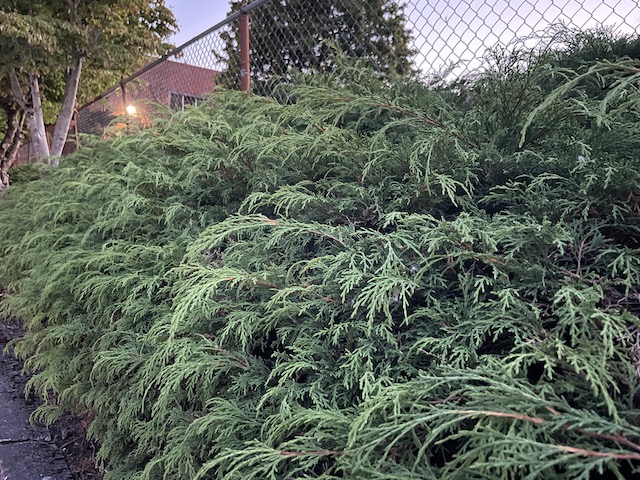
Back in October of 2018 Evan Bean and I visited Western Hills Garden together. Honestly, I remember very little about that trip at this point—since so many of the trips kind of run together—but it was my first and only visit to that historic location and I’m glad we went for many reasons. It’s regionally significant to say the least, and it also influenced so many of the folks I’ve learned from over the years.
I mention the garden since this post is about a plant I bought there. It comes from a monotypic genus with a single species. It’s not often seen in plantings, but when it is, it always makes me smile. This cool conifer is native to far eastern Russian, and is tough as nails when winter storms hit.
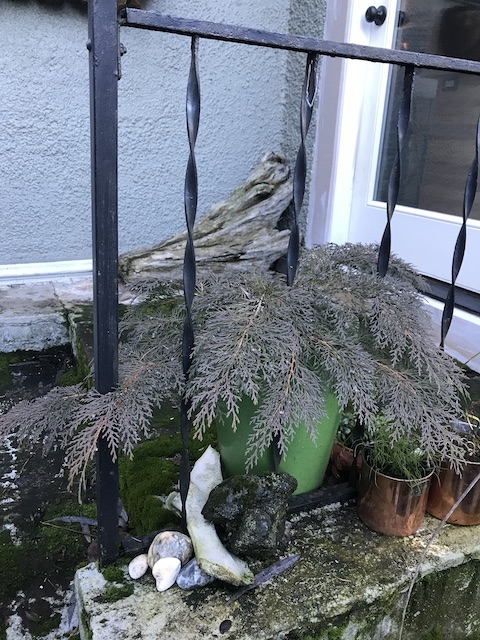


For the last five years or so it did well in a medium-sized planter on my back porch. When I’d leave for work or school, it always made me smile with its layers of feathered foliage. When I looked out at in during colder months, I loved how the layers of branches danced and waved in the wind.
I should have transplanted it a year or two ago so I was honestly concerned I might kill it when I finally got to it. But now that it’s over, I think it’s ok and I plan to plant it in the ground soon. It’s time. (And I found a replacement for it above.)
Its name comes from Micro “small” and the word biota which is a synonym for another genus with a sole species, Platycladus orientalis. This additional monotypic genus is found in East Asia and North Asia, but it’s also naturalized in other parts of the continent. So Microbiota decussata was described as a smaller version of it. Both are in the Cupressaceae family.
The plant has nothing to do with the community of microorganisms that live in and on the human body, but I’ve been asked about that before. It always makes me chuckle a little.

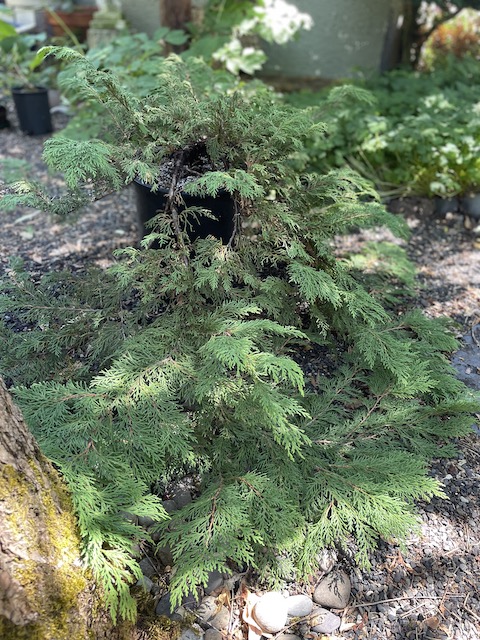
Microbiota decussata was described scientifically just over 100 years ago. Interestingly though, it took 50 more years for the rest of the world to learn about it due to the notorious secrecy in the Soviet Union.
It is a prostrate evergreen shrub, growing up to 20 inches tall, and 6-16 feet wide. The cones are some of the smallest of any conifer, making them insignificant ornamentally. Microbiota decussata is drought tolerant and it’s used frequently in plantings as an evergreen ground cover. During the winter, it will bronzes up like some Cryptomeria and it’s hardy in USDA zones 3a-8b.
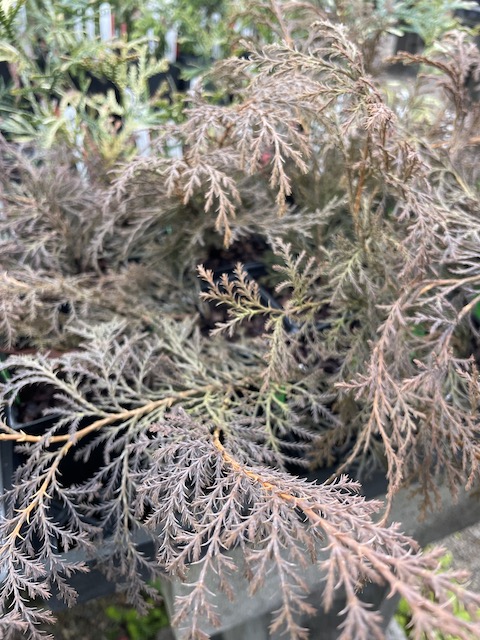
In cultivation, there’s at least one hard-to-find variegated form (if not more) and there’s this cultivar offered commercially. Microbiota decussata Celtic Pride™or Microbiota decussata ‘Prides’ is said to have more diseases resistance and less tip dieback than the species. (A friend has also told me that it’s a great choice in the southeastern US.)
None of them will tolerate poorly drained soils.
When I plant it, I hope it will be happy. If you didn’t know, it can be a host plant for Phytophthora lateralis. (You can read all about what happened here in Oregon in an abstract here. )
I will plant it in the ground soon—for science.

I love to walk by this patch of it planted above the sidewalk near my home. It’s the same patch as the featured image at the top of this post. I wish I had a wall to plant it on, but I will likely plant it somewhere I can enjoy it out the window during the winter.
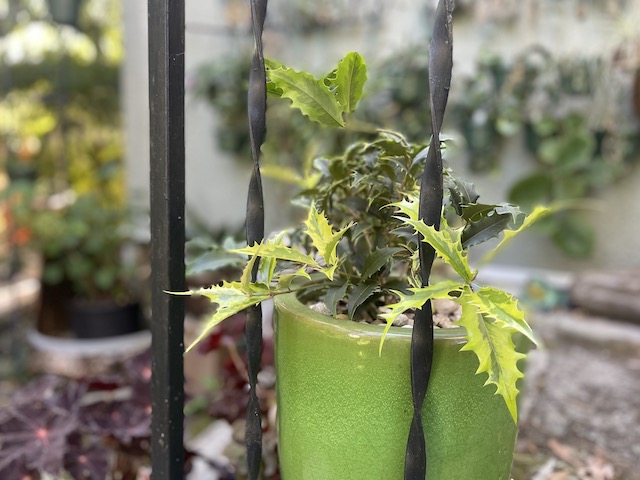
The new occupant of the container on the back porch is Osmanthus armatus ‘Zipline’. It might need to be protected if it gets too cold, but the container is easy to move, and honestly, this little perky and pokey introduction from Xera Plants is worth it until I find something else once this is large enough to plant elsewhere.


 Ann Loves Plants
Leave a reply to Ann Amato Cancel reply